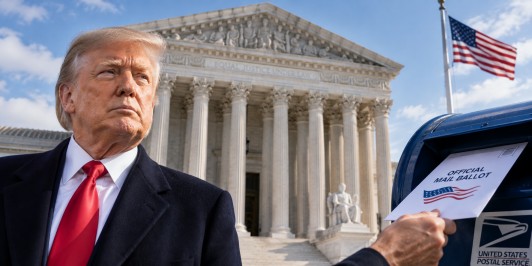
The United States Supreme Court has declined the Trump administration’s request to introduce new limitations on mail-in voting procedures before the upcoming November midterm elections. This decision allows states to continue distributing ballots under their current systems, as the legal battle over the proposed changes progresses. The case holds significant implications, considering the reliance of millions of Americans on mail-in voting during elections.
The administration’s proposal aimed to impose new guidelines for states in verifying and processing mail ballots. These guidelines included enhanced checks against federal records, changes to ballot envelopes, and the introduction of an online platform for voter information submission. However, this initiative was met with opposition from various states and voting rights organizations, who argued that the president lacks the constitutional power to set nationwide election administration rules.
Election officials raised concerns that implementing substantial changes so close to the midterm elections could lead to disruptions in the voting process. Some states had already started distributing mail ballots while the administration’s proposed system was still under consideration. The Supreme Court’s order highlighted that the administration was unlikely to prevail in its legal challenge at this juncture and found no justification to overturn the lower court’s injunction.
Advocates for voting rights and election officials welcomed the court’s ruling, noting that upholding existing procedures would provide more stability for both voters and local election authorities. The controversy began with an executive order issued earlier in the year, which directed the postal service to limit the delivery of certain mail ballots based on federal records. The administration justified this by claiming federal oversight of the postal service included the ability to set rules for election mail handling.
Critics argued that these proposed changes could interfere with the timely delivery of millions of ballots, causing confusion among voters and election officials shortly before the elections. While the Supreme Court’s recent decision does not resolve the legality of the administration’s proposed restrictions, it ensures that the current mail-ballot system remains operational as the broader legal dispute unfolds.