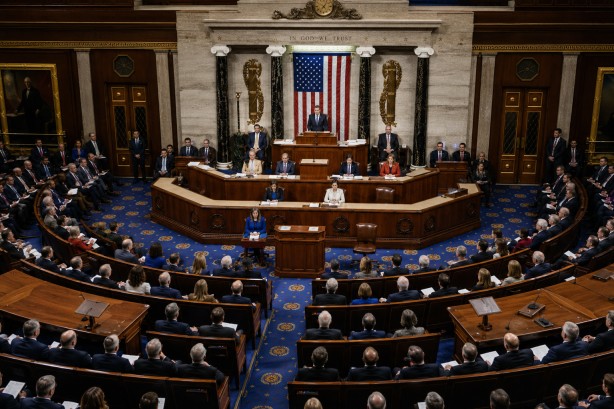
In a closely contested vote, the U.S. House of Representatives has passed a $1.15 trillion National Defense Authorization Act (NDAA), which now awaits consideration in the Senate. The bill’s approval, with a 216-212 vote largely along party lines, underscores persistent divisions over defense spending, military policies, and U.S. foreign engagements, particularly in the Middle East. The package includes a 5% to 7% pay increase for military personnel and substantial funding intended to bolster the U.S. military’s capabilities.
Republican leaders have championed the legislation as essential for modernizing the armed forces and enhancing national security. They argue the investments are critical to maintaining the country’s defense readiness. Meanwhile, Democratic opposition centers on concerns that the defense budget is disproportionately large, especially as other domestic programs face potential funding cuts. The opposition also highlights the broader implications of military spending, particularly in light of recent geopolitical tensions.
One of the key points of contention is President Donald Trump’s recent military actions in the Middle East, specifically the strikes against Iran conducted without congressional approval. This has raised alarm among some lawmakers about the potential for escalating military commitments in the region. Additionally, the bill includes voting-related provisions, such as stricter voter ID requirements and restrictions on mail-in voting, which have been pushed by Trump but criticized by Democrats as inappropriate for inclusion in defense legislation.
During deliberations, the House also faced heated debates over various amendments, including one that sought to terminate U.S. military aid to Ukraine, which was ultimately rejected. Discussions around transgender military policies and defense healthcare further fueled partisan disagreements. These debates reflect broader societal issues that have become intertwined with defense policy discussions.
In a related development, House Republicans advanced a budget framework authorizing $73 billion for military operations involving Iran, a figure that falls short of the Pentagon’s wider defense funding request. This move is part of a broader strategy to manage U.S. military engagement in the region, though it remains a contentious issue among lawmakers. As the NDAA heads to the Senate, these debates are likely to persist, reflecting the complex interplay between domestic politics and national defense priorities.