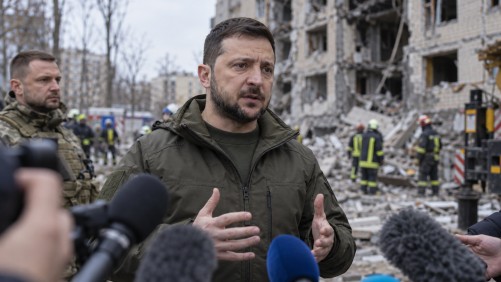
In a recent development, Ukrainian President Volodymyr Zelensky expressed concern over the lack of advance warning from the United States and other allies before a Russian ballistic missile attack on Sunday night. This incident marks the third time in a short span that Ukraine did not receive its customary early alerts about incoming missile threats, according to Zelensky.
The Ukrainian leader highlighted the issue, noting that Washington had not provided a clear explanation for the lapse in intelligence sharing. Despite these concerns, U.S. President Donald Trump denied any cessation of intelligence sharing, assuring that the U.S. continues to provide necessary intelligence to Ukraine.
Ukrainian officials suspect there might have been intermittent restrictions on intelligence sharing from the U.S., which could have allowed the initial wave of Russian strikes to occur without notice. They claim that intelligence support resumed in time for a subsequent wave of attacks later that night. However, a U.S. Defense Department official stated there had been no alteration in Pentagon policy regarding intelligence sharing with Ukraine.
This dispute arises amid escalating tensions between Zelensky and Trump over the ongoing war and attempts to resolve the conflict. Earlier in March 2025, the United States temporarily halted intelligence sharing with Ukraine following a tense meeting between the two leaders and U.S. Vice President JD Vance, though this suspension was later lifted.