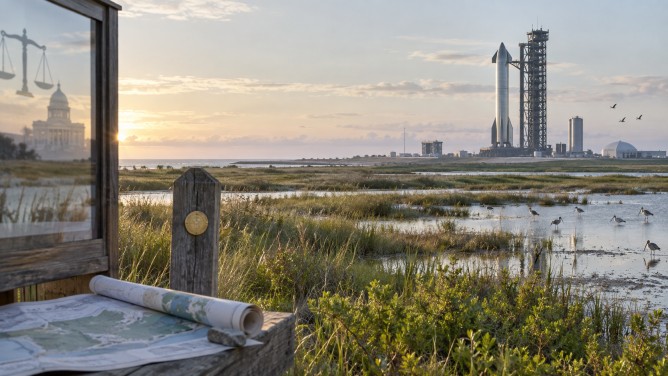
The expansion of SpaceX’s operations in South Texas has sparked legal challenges as environmental and tribal groups seek to protect the Lower Rio Grande Valley National Wildlife Refuge. These groups have raised alarms over the potential environmental risks posed by a proposed land exchange that would transfer more than 700 acres of federal refuge land to SpaceX. Despite these concerns, a federal judge has recently decided not to halt the transaction.
US District Judge Fernando Rodriguez Jr. denied a preliminary injunction request aimed at stopping the land deal. The plaintiffs, consisting of environmental and tribal organizations, argued that the land transfer could harm wildlife habitats and cultural sites while restricting public access. Nonetheless, Judge Rodriguez determined that there was insufficient evidence to prove the land would suffer significant damage during the ongoing lawsuit.
The land exchange agreement involves SpaceX giving the federal government 683 acres of its property in exchange for land within the 103,000-acre wildlife refuge. The property SpaceX would acquire is strategically located near its rocket launch facility along the US-Mexico border, potentially facilitating the company’s development plans.
The US Fish and Wildlife Service has assessed the proposed exchange and concluded that it would not lead to significant environmental impacts. The agency also suggested that the deal could offer long-term conservation benefits and improve habitat connectivity in the region.
While the court’s ruling allows SpaceX to proceed with its plans for now, the legal battle is far from over. The environmental and tribal groups have vowed to continue their fight against the land transfer, highlighting the ongoing tension between industrial expansion and environmental conservation in South Texas.