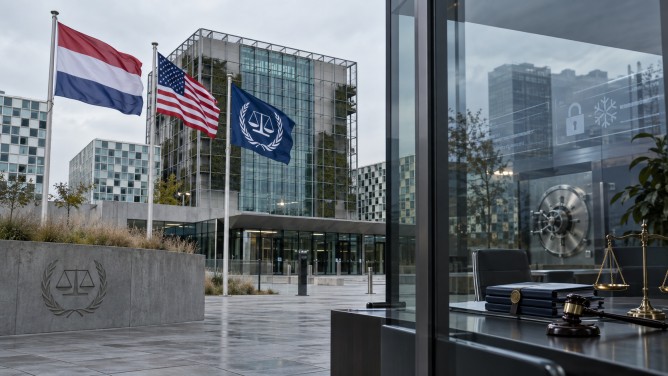
The ongoing tensions between the United States and the International Criminal Court (ICC) have prompted the Netherlands to brace for potential new sanctions from Washington. These developments come amidst a broader dispute regarding the ICC’s investigations involving U.S. and Israeli officials, which the U.S. government claims exceed the tribunal’s authority.
In preparation for the possible escalation, Dutch authorities are considering various strategies to ensure the ICC can continue its crucial functions. This includes maintaining staff salaries, safeguarding witnesses, and keeping its detention facilities operational. The potential U.S. sanctions could further isolate the tribunal by restricting its transactions with American companies, affecting essential services like banking, insurance, and technology.
The Trump administration has already imposed sanctions on several ICC officials, targeting judges and senior legal personnel. The proposed measures threaten to extend these sanctions to the ICC as an institution, potentially crippling its operations by limiting access to necessary resources and services.
In response, the ICC has proactively started shifting some of its services away from U.S.-based providers and is reevaluating its financial and technological frameworks to mitigate the potential impact. The Netherlands, hosting the ICC in The Hague since its establishment in 2002, plays a pivotal role in aiding the court, which is tasked with prosecuting individuals accused of heinous crimes such as genocide, war crimes, and crimes against humanity.
This situation underscores the geopolitical struggle over the ICC’s jurisdiction and authority, as the Netherlands and the international community watch closely to see how these tensions will unfold and affect the court’s future functioning.