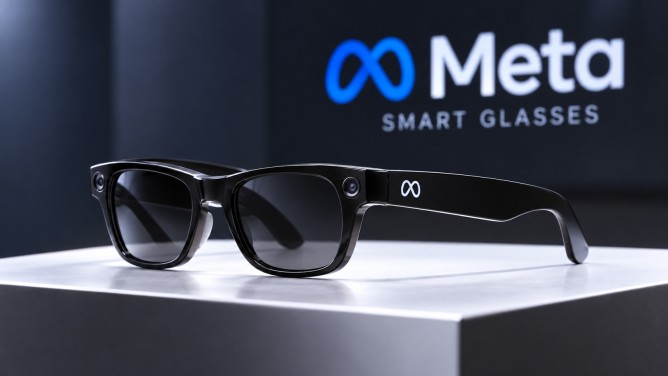
Law enforcement agencies across the United States are raising alarms over the potential misuse of Meta’s smart glasses, which come equipped with cameras and could discreetly record officers, detention centers, or sensitive law enforcement operations. Internal memos from various agencies reveal growing apprehensions that these glasses, which bear a striking resemblance to regular eyewear from brands like Ray-Ban and Oakley, might enable unauthorized recording in restricted zones without drawing attention.
The New York Police Department’s counter-terrorism division has specifically alerted officers to the risk of smart glasses capturing confidential details within detention centers, such as the layout of cells, positions of security cameras, and patrol routines. This warning emerged after videos surfaced online that appeared to show individuals clandestinely recording inside a detention facility, unbeknownst to those around them. Similar advisories have been issued in Maine and other states, where there is also concern that features powered by artificial intelligence, like facial recognition, could be exploited to identify officers and gather publicly accessible information about them.
Federal bodies have reacted by imposing restrictions; notably, the US Immigration and Customs Enforcement agency has categorized smart glasses as body-worn cameras, prohibiting their use by employees in federal workplaces due to the risk of inadvertently capturing or transmitting sensitive data. Additionally, law enforcement is contemplating the potential for these glasses to be used in planning stages of crimes or terrorist acts, referencing past incidents such as the New Orleans attack, where the assailant reportedly used smart glasses for reconnaissance before the attack.
Meta, the company behind these smart glasses, insists that the devices are designed to flash a white LED light whenever photos or videos are being recorded, a feature that cannot be disabled. The company further contends that similar recordings could just as easily be made using more conventional devices, like smartphones. Despite these assurances, the increasing concerns underscore a broader discourse on AI-driven surveillance technology, privacy rights, and the public’s ability to document law enforcement activities.
Privacy advocates are actively engaging in this debate, asserting that surveillance technology should not be monopolized by authorities. They argue that maintaining the public’s ability to document official actions is crucial for transparency and accountability. This ongoing dialogue reflects the complex intersection between technological advancement, privacy, and the oversight of law enforcement practices in the digital age.