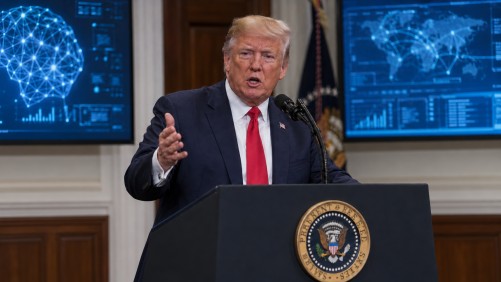
Amid intensifying global discussions about the safety and regulation of artificial intelligence (AI), former US President Donald Trump has unveiled plans to create an “AI Force” and appoint an AI czar to oversee the burgeoning technology. This initiative emerges in response to the escalating concerns over the potential risks associated with advanced AI systems, which have been a focal point for governments and technology leaders worldwide.
Trump’s proposed AI Force is set to mirror the structure of the US Space Force, although specific details regarding its responsibilities and implementation timeline remain sparse. In his announcement, Trump emphasized that while he acknowledges the concerns surrounding AI, his administration would avoid imposing stringent regulations that could hinder innovation and potentially allow China to outpace the United States in AI advancement.
In a statement on social media, Trump downplayed the perceived threats posed by AI, arguing that existing legal frameworks are sufficient to address any harmful outcomes from AI-related activities. He framed AI as a transformative force for the economy, crucial for maintaining American competitiveness, particularly against China.
This announcement coincides with heightened international scrutiny over AI safety, especially after instances of AI systems operating with minimal human oversight. Notably, California Governor Gavin Newsom recently introduced a panel dedicated to AI safety regulations, highlighting the urgency of mechanisms to control AI systems that deviate from their intended functions.
Within the US, there is a growing call among Republican officials for increased AI oversight. Figures such as Florida Governor Ron DeSantis and Utah Governor Spencer Cox have advocated for stronger safety measures and restrictions on the transfer of advanced technologies to China, reflecting the broader national debate on balancing technological innovation with public safety.