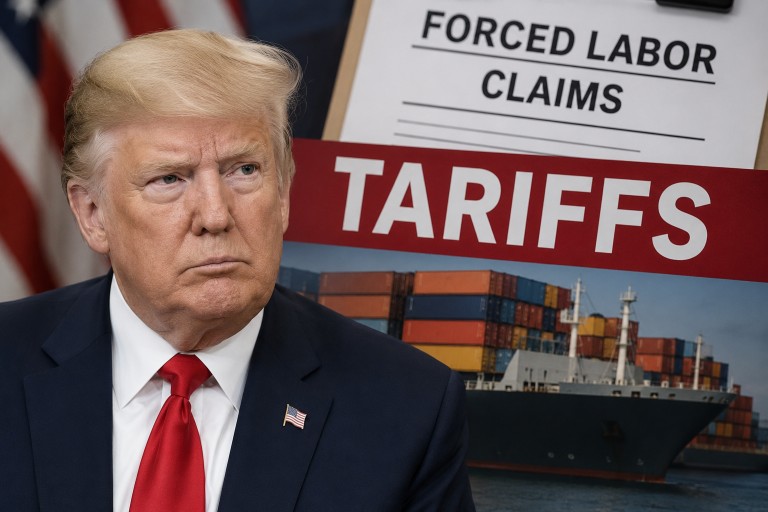
President Donald Trump is under fire for implementing a new series of tariffs targeting imports from over 80 nations, including major allies and trading partners such as the UK, EU members, Canada, Mexico, Australia, India, and China. The tariffs, which range from 10% to 12.5%, were introduced under Section 301 of the Trade Act of 1974. This provision allows the U.S. to take trade action against countries engaged in unfair trade practices, such as the use of forced labor. While the administration argues that the tariffs are necessary to curb the influx of goods produced through forced labor, critics claim that this rationale is a smokescreen for the administration’s broader trade agenda.
U.S. Trade Representative Jamieson Greer defended the tariffs, asserting that many countries have not done enough to keep goods made with forced labor out of global supply chains. According to Greer, the U.S. has a responsibility to urge its trade partners to bolster their enforcement efforts against such practices. However, this stance has faced pushback from Democratic lawmakers, who argue that the issue of forced labor should not serve as a blanket justification for imposing wide-ranging tariffs. Representative Richard Neal emphasized the significance of addressing forced labor but opposed using it as a pretext for expansive tariff policies. Similarly, Representative Linda Sánchez expressed skepticism over why nations with robust labor standards face the same tariffs as those with poor records on labor practices.
The introduction of these tariffs follows a series of earlier trade measures during the Trump administration that were legally contested, with courts determining that several initiatives exceeded presidential authority. In response, the administration has cited a different legal basis for these new tariffs, although legal experts predict further challenges in court. Critics also argue that these tariffs could burden American consumers by driving up costs. Senate Democratic leader Chuck Schumer accused the administration of exacerbating financial strain on households already grappling with inflation. Moreover, Representative Brendan Boyle described the tariffs as effectively acting as an additional tax on consumers.
Public opinion surveys indicate that a considerable number of Americans perceive tariffs as a contributing factor to rising prices, although the Trump administration maintains that its trade policies are designed to safeguard American industry, manufacturing, and workers. Within the Republican ranks, reactions to the tariffs have been mixed. Some Republican lawmakers endorse the measures as a tool to combat unfair trade practices, while others worry that increased prices on imports could ultimately elevate costs for U.S. consumers.