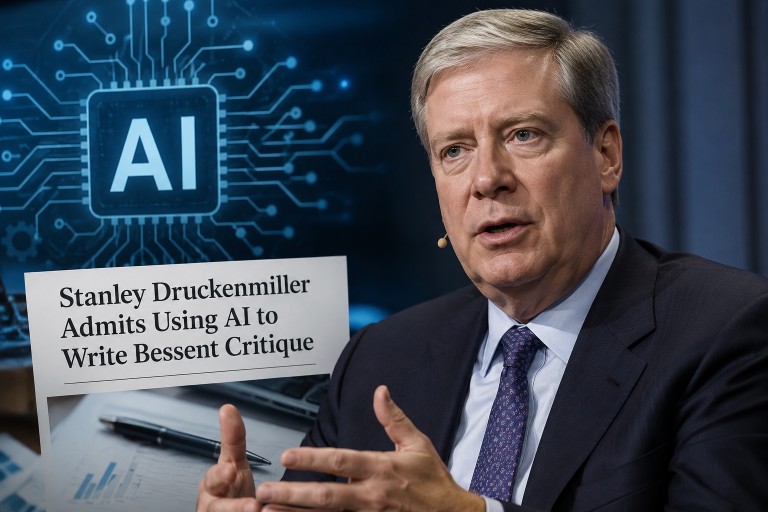
In a recent development, billionaire investor Stanley Druckenmiller has acknowledged employing artificial intelligence to assist in crafting an opinion piece that critiques US Treasury Secretary Scott Bessent’s handling of the bond market. Druckenmiller emphasized that while AI played a role in the writing process, the core ideas and arguments presented in the piece were entirely his own. He expressed satisfaction in utilizing AI as a tool to enhance his writing.
The publication that featured Druckenmiller’s article supported his approach, asserting that the primary concern was whether the contributor’s original views and arguments were faithfully conveyed. This defense underscores a broader conversation about the role of AI in journalism and opinion writing, particularly focusing on issues related to authorship and editorial standards.
The revelation of Druckenmiller’s use of AI has fueled an ongoing debate about the integration of artificial intelligence into journalistic practices. Key points of contention include how AI impacts the authenticity of authorship and the transparency required in editorial processes. These discussions are increasingly relevant as more writers and publications explore AI’s potential in content creation.
As AI continues to evolve, its application in writing and journalism brings both opportunities and challenges. It raises questions about maintaining the integrity of personal expression while leveraging technology to enhance productivity and creativity. The discourse surrounding AI in journalism is likely to persist as the industry grapples with balancing technological innovation with traditional standards of authorship and editorial oversight.