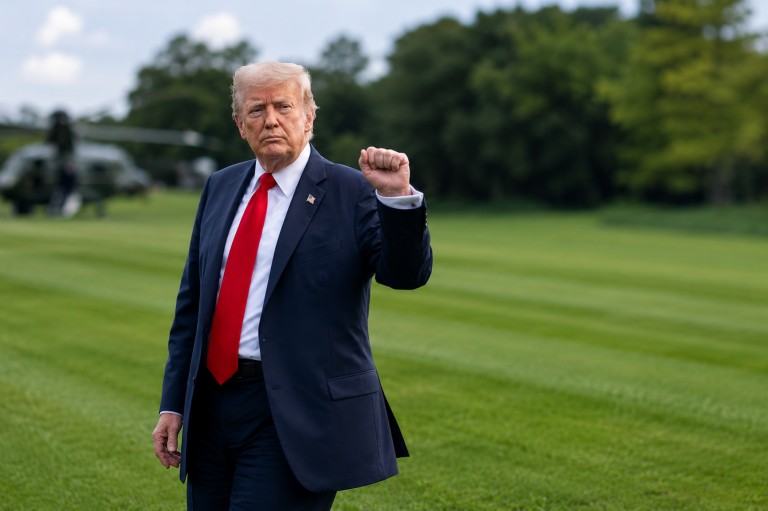
In a surprising turn of events, former U.S. President Donald Trump announced plans to increase American military presence in Poland by sending an additional 5,000 troops. This decision comes on the heels of a prior announcement to reduce U.S. forces in Europe, which had involved withdrawing around 5,000 troops, including those rotating between Germany and Poland. The initial plan to scale down raised concerns among NATO members about the U.S.’s dedication to European security.
The abrupt change in strategy has left NATO allies and U.S. defense officials bewildered. They had begun to adjust their military arrangements based on the previous announcement of troop reductions. Trump’s decision to bolster the U.S. military presence in Poland was attributed to the strong relationship with Polish President Karol Nawrocki, yet it has added to the uncertainty surrounding U.S. military commitments in Europe as tensions with Russia persist due to the ongoing conflict in Ukraine.
European leaders have expressed their unease about the unpredictability of future U.S. military deployments. They are closely observing Washington’s evolving stance, mindful of the high-stakes environment created by Russian aggression. U.S. Secretary of State Marco Rubio indicated that while allies understand the U.S. is reassessing its global military strategy, the possibility of troop reductions in Europe remains on the table.
Currently, approximately 80,000 U.S. troops are stationed across Europe. As NATO continues discussions on defense strategies and troop allocations along its eastern frontier, the organization faces the challenge of balancing U.S. support with bolstering its own security measures. NATO Secretary-General Mark Rutte has stressed the importance of European countries enhancing their defense capabilities alongside American assistance.