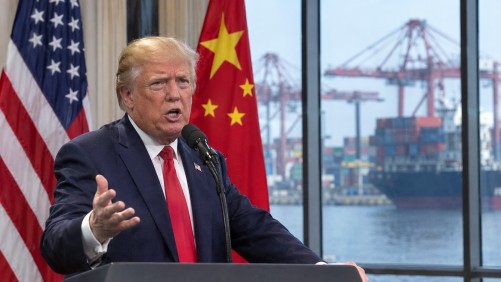
The Trump administration is poised to introduce new tariffs on imports from 16 major trading partners, a move that could escalate international trade tensions, particularly with China. The planned tariffs are part of a broader effort by the US to address what it perceives as excess industrial capacity in global markets.
Among the economies targeted by the proposed tariffs are China, India, Japan, South Korea, Mexico, Vietnam, Taiwan, Thailand, Malaysia, Indonesia, Switzerland, Norway, Singapore, Bangladesh, Cambodia, and the European Union. While the measures are expected to vary by country, China remains a central focus due to its significant trade surplus, which is projected to exceed $1 trillion by 2026.
Despite the heightened focus on China, the planned tariffs are set to remain within existing trade agreement limits between Washington and Beijing, including a 20% cap on additional tariffs if the current trade truce continues. The US administration aims to adhere to current tariff ceilings for other nations as well, such as a 15% limit for the European Union, Japan, and South Korea, and a 19% ceiling for Malaysia.
These tariff plans are tied to investigations by the US Trade Representative under Section 301 of the Trade Act of 1974, which assess whether foreign industrial policies create unfair competitive advantages for overseas manufacturers. The Trump administration has voiced particular concern over China’s production capacity in sectors like steel, aluminum, electric vehicles, household appliances, and solar products, arguing that excessive exports could harm American industries.
Chinese investments in Southeast Asian countries are also under scrutiny, as manufacturing in these regions might be used to bypass existing tariffs on goods supplied to the US market. Beijing has dismissed US claims of industrial overcapacity as politically motivated and urged both nations to maintain stable economic and trade relations.
The proposed tariffs aim to bolster US trade protections and address concerns over foreign competition, but they may also introduce additional uncertainty for international businesses and global supply chains. As the US moves forward with these plans, reactions from the targeted countries and their potential impact on the global trade landscape remain to be seen.