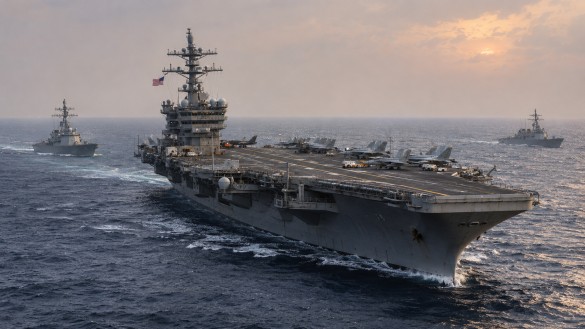
Amid escalating tensions with Iran, the United States has bolstered its military presence in the Middle East by deploying the USS Theodore Roosevelt, its third aircraft carrier in the region. The deployment, which took place on Monday, includes the carrier’s strike group, adding to the naval forces already comprising the USS George H.W. Bush and USS George Washington. This move brings thousands of additional military personnel and several supporting vessels, including destroyers and cruisers, operating across the Arabian Sea and Red Sea.
The decision to increase the U.S. naval presence comes after a period of uncertainty regarding the conflict with Iran. U.S. President Donald Trump has oscillated between threats of further military action and statements suggesting that the military conflict is essentially over. Despite these mixed signals, Trump has maintained a firm stance, warning Tehran of potential additional strikes should diplomatic efforts, particularly concerning Iran’s nuclear program, falter.
Negotiations between the two nations have reached an impasse, primarily due to disagreements over nuclear restrictions and the U.S. naval blockade impacting Iranian oil shipments. This stalemate has contributed to ongoing tensions in the region, particularly around the Strait of Hormuz. This critical maritime passage, through which around 20% of the world’s oil supply once flowed, has seen increased security risks. There have been reports of attacks on commercial vessels, damaged tankers, and potential naval mines threatening the waterway.
The expanded U.S. military deployment underscores Washington’s continued strategy to exert pressure on Iran while safeguarding vital maritime shipping routes. This approach reflects the broader uncertainty regarding the potential for renewed military action, as both nations remain locked in a complex geopolitical standoff.