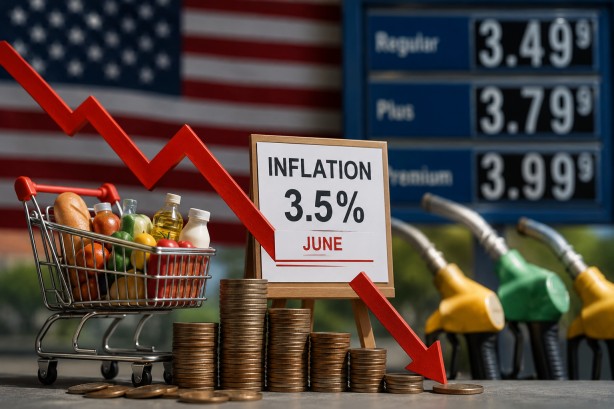
In June, the rate of annual inflation in the United States decreased to 3.5%, primarily due to a temporary dip in energy costs that helped lessen the overall financial burden on consumers. This slowdown followed a period of higher inflation rates in the preceding months. According to the most recent Consumer Price Index (CPI) figures, consumer prices fell by 0.8% compared to May. The drop in gasoline and fuel expenses played a significant role in this decline, effectively counterbalancing the rise in costs of food, housing, utilities, and other necessities.
Core inflation, a measure that strips out the more volatile food and energy prices and is closely watched by the Federal Reserve, decreased slightly to 2.6% on a year-over-year basis. Despite this moderation, concerns remain that this relief might not last long, as geopolitical tensions in the Middle East have started to drive up global oil prices again. The increase in crude oil prices is already being felt by consumers at the pump and is also impacting operating costs for industries such as aviation and transportation.
The Federal Reserve is set to review the latest inflation data in conjunction with labor market conditions during its policy meeting later this month. Although there has been a reduction in inflation, it still surpasses the central bank’s long-term target of 2%, leaving the timing of any potential interest rate adjustments uncertain. The careful assessment of economic indicators will be crucial in determining the next steps in monetary policy.
As inflation shows signs of moderation, questions linger about its sustainability amidst fluctuating global oil prices. The recent decrease in energy costs provided a temporary reprieve for consumers, but the economic landscape remains complex. The Federal Reserve’s upcoming decisions will be pivotal in navigating the challenges posed by these dynamic factors and maintaining economic stability in the face of ongoing uncertainties.